
A QUIET GIANT
How a scrappy IRC conversation in 1999 became one of the world's most trusted open source platforms — and why the community behind it is inviting the whole world to join them on April 16th.
An invitation to join World Plone Day on April 16th 2026.
Author: Armin Stroß-Radschinski, March 23th 2026
The German-language narrative referenced throughout this article was developed collaboratively as a communication initiative for the DACH region.
The English perspective is his independent editorial interpretation.
There is a particular kind of confidence that doesn't announce itself.
You find it in the work of Karl Popper, who dismantled certainty so precisely that certainty never quite recovered. In the aphorisms of Wittgenstein, who compressed entire philosophical arguments into sentences that fit on a postcard. In the engineering culture of Oslo, Portland and Berlin — where the highest compliment you can receive is not brilliant but solid. Where a thing that works for twenty-five years without drama is considered, quietly, a masterpiece.
It is in this spirit — not this geography — that the Plone community has been building software since the turn of the millennium.
The origin story is worth telling correctly, because it says everything about what Plone actually is. In 1999, Alexander Limi and Alan Runyan had a fortuitous meeting on #zope, the IRC channel dedicated to Zope development. Runyan was American. Limi and the third co-founder, Vidar Andersen, were Norwegian. They had never met in person. They forged an online friendship based on a mutual love of Zope, Python and music — and with the encouragement of Paul Everitt, one of the founders of Zope Corporation, built a CMS named after an electronica band. The band was Plone, on the Warp record label. The music was playful and minimalistic. The original quote floating around at the time was that "Plone should look and feel like the band sounds."
Thus, entirely without planning to, they built something that would outlast almost everything else from that era of the web.
Plone has brought together over 1,000 contributors over time and is supported by a worldwide network of solution providers. It runs platforms for the It runs platforms for the German Aerospace Center (DLR), the University of Bologna, the European Union Agency For Cybersecurity (ENISA), and school districts with tight budgets and zero appetite for vendor lock-in. And recently, the German-speaking Plone community published a story. Not a press release. Not a feature comparison. Not a vendor white paper.
A saga.
Seven chapters. Seven audiences. One invitation.
„Wir haben fast alles — bis auf Dich." (We have almost everything — except you.)
That line – coined in german – alone deserves a moment of pause. In a world where software platforms routinely promise to do everything, be everything, replace everything — here is a community that stops short and hands the power of the promise back to you. It is disarming. It is precise. And if you listen carefully, it is also very funny — in that particular dry register that tends to cut through enterprise noise better than any marketing budget.
On April 16th 2026, World Plone Day will bring together developers, architects, editors, security professionals and decision-makers from across the globe for a full day of talks, demonstrations and conversations covering every dimension of what this platform has become. What follows is not a programme guide. It is an attempt to explain why their seven conversations matter — and why they are being led by people who have earned the right to have them.
I. ON BELONGING
The Community Builder
The first and perhaps most surprising move in the Plone narrative is to open not with technology but with values.
Most software communities, when they tell their story, begin with features. Plone begins with a question about whether you believe software should serve people rather than shareholders. It is an old question — older than the internet — but it lands differently when asked by a community that has been answering it consistently for a quarter of a century.
After version 2 was released in 2004, the Plone Foundation was established with a board of directors and the goal to protect and safeguard Plone. A merit-based membership and a culture of teams followed. The founding developers deliberately passed their decision-making power to a framework team led by a release manager. No single person. No single company. No exit strategy.
This is not incidental to the software. It is the software's deepest architecture.
A Technology Strategy Lead at one of the world's largest open courseware consortia put it with characteristic understatement:
"We needed a platform that shares our values — open, collaborative, durable. One platform that never asks us to compromise."
In an era where digital infrastructure is increasingly owned by a shrinking number of very large, very powerful companies, the existence of a Foundation-backed community platform is not merely a procurement option. It is a position. A quiet one — but then, the quiet ones tend to last.
II. ON TRUST
The Security Officer
There is a word that resists easy translation across cultures: the idea of reliability not merely as function but as character. The reliability of something you can count on to behave. To do what it says. To not surprise you in ways you didn't ask for.
In cybersecurity, surprises are the enemy.
Plone's proponents cite its security track record and its accessibility as primary reasons to choose it. Its permission architecture is granular, audited and transparent. Its common vulnerabilities and exposures (CVE) history is one of the cleanest in the open source CMS landscape. And its community responds to vulnerabilities not with marketing language but with patches.
A Head of Digital Infrastructure at a major European municipal authority — one that moved to Plone after a painful incident with a competing platform — offered this:
"It is not glamorous. It is simply solid."
Not glamorous. Simply solid.
In procurement committees from Oslo to Vienna to Singapore, that sentence closes more deals than any feature demonstration ever could. Understated credibility, delivered without apology, is one of the most powerful communication tools in existence — and one of the most underused.
III. ON DIGNITY
The Content Editor
Here the narrative makes its most human turn — and its most politically astute one.
In the long history of enterprise software, the content editor has been something of a forgotten figure. Developers get the conferences. Architects get the whitepapers. The person who actually sits down every morning to publish the content that the entire organisation depends on — that person has historically been handed a tool designed by engineers for engineers and told to get on with it.
Plone's third chapter addresses this directly. Not with a list of UX features. With an acknowledgement of indignity.
You know the feeling. The CMS that was supposed to help you has become another thing to manage.
A Digital Resources Manager at a major British university, who has worked on the same Plone installation for a decade, said simply:
"I no longer chase approval emails. That alone was worth the decision."
Ten years. Same platform. Still surprising them.
The best tools are the ones that make themselves invisible so that you can be visible.
Plone understood this early and built for it deliberately. That is not a small thing.
And it is worth noting that this understanding came from a community that, from its very first IRC conversation, was more interested in usability than in showing off.
IV. ON TIME
The IT Architect
If there is one obsession that serious engineering cultures share across geographies it is this: the relationship between structure and duration. How do you build something that holds? Not just for the next release cycle. Not just for the current budget period. For the next decade. And for the one after that.
This is the question that keeps enterprise architects awake at night — and it is the question that Plone's fourth chapter answers with quiet authority.
The platform speaks headless. It speaks API-first. It has evolved from a monolith to packages, from browser-only to content everywhere, from CMS as king to CMS as a flexible, composable service. A modern React frontend called Volto sits at the presentation layer while Python 3 anchors the backend. When the next frontend framework arrives — and it will arrive, as inevitably as the next JavaScript paradigm — the content, the workflows, the permissions, the institutional memory: all of it remains intact.
An Enterprise Architect who designed the content platform for a major European environmental agency put the point with admirable economy:
"We needed it to outlast political cycles and technology trends. Nothing else came close."
Political cycles. Technology trends. These are not small adversaries. The fact that a CMS is even being evaluated against them tells you something about the stakes involved in digital infrastructure decisions. And the fact that Plone passed that evaluation — repeatedly, across institutions, across continents — tells you something about what 25 years of disciplined, internationally distributed engineering actually produces.
V. ON SOVEREIGNTY
The Organisation
There is a conversation happening across the world right now — in government ministries, university boardrooms, NGO strategy sessions and municipal IT departments — about what it means to own your digital infrastructure.
The conversation has many names. Digital sovereignty. Vendor independence. Data ownership. But underneath the terminology is a single, urgent question:
Who controls the platform that controls your organisation?
Plone's answer is structurally simple and practically profound. Plone's intellectual property and trademarks are protected by the non-profit Plone Foundation. This means that Plone's future is not in the hands of any one person or company. High-profile public sector users include the Brazilian Government, European Union Agency For Cybersecurity (ENISA), German Aerospace Center (DLR), European Environment Agency (EEA), and the African Continental Qualifications Framework. Not because it was the cheapest option in every case. Because operational sovereignty isn't negotiable.
An IT Director at a school district with a tight budget and thirty websites to manage described the procurement conversation with what can only be described as disarming brevity:
"Enterprise-grade security, user management across 30 school websites, and a licensing cost of zero. The conversation was very short."
In an era of escalating SaaS costs, surprise price increases and platform discontinuations, the proposition of a robust, community-maintained, Foundation-protected platform is not merely attractive. For many organisations, it is becoming a strategic necessity.
VI. ON CRAFT
The Developer
The Plone community is an incredibly diverse group that bridges many types and sizes of organisations, many countries and languages, and everything from technical novices to hardcore programmers. But its heart — the people who carry it forward generation after generation — are the developers who chose it not because it was fashionable but because it was right.
Plone's sixth chapter speaks directly to the practitioner who has been burned before and kept going. The developer who has survived three migrations in five years. Who has done the dependency audits at eleven o'clock on a Sunday night. Who arrives at every new platform with a healthy, hard-won scepticism.
Plone impresses not with promises. We have a track record!
REST API. Volto frontend. Python 3 backend. A community that answers questions on Friday afternoons. Maintainers who are still there. A repository that does not go quiet.
A Senior Backend Developer who came to Plone after multiple painful migrations at previous organisations said:
"Two years later I have improved performance tenfold and have not had to rebuild anything from scratch. That was new for me."
That was new for me. Four words that contain an entire biography of professional disappointment followed by genuine surprise. It is the most honest testimonial in the collection — and probably the most persuasive one for anyone who has lived a similar story.
Which, in 2026, is most developers.
VII. ON DECISION

The C-Level
The final chapter of the Plone saga does something unusual. It does not try to convince the decision-maker. It assumes the decision-maker is already convinced — and offers them the language to articulate why.
This is a sophisticated rhetorical move and a universally effective one. It does not flatter. It does not perform urgency. It simply lays out what the people in the room have already told you — your developers, your editors, your security team, your architects, your procurement department — and observes that they all arrived at the same answer independently.
A Chief Information Officer at a European regional development agency, reflecting on a platform evaluation in which every stakeholder group reached the same conclusion without coordination, said:
"Plone was the only platform where everyone in the room — technical, editorial, legal, finance — came back with the same answer independently."
Consensus without pressure. Alignment without a sales process. That is either very good luck or very good software. After 25 years, it is reasonable to conclude it is the latter.
The saga closes — as the best stories do — not with a feature list or a call to action but with a restatement of the invitation that started everything:
We have almost everything. Except you.
CODA: THE IRC CHANNEL THAT CHANGED THE WEB
In 1999, two people with too much time on their hands and a mutual love of Python met on an IRC channel and built a CMS named after an electronica band with questionable musical talent. One was American. Two were Norwegian. None of them could have predicted that their late-night chat would eventually power platforms for the United Nations, the FBI, and hundreds of universities, governments and NGOs across the world.
They were not building an empire. They were scratching an itch — the oldest and most honest motivation in open source software.
What followed was something rarer than a successful product. They published Plone, established a very open development process, and release 1.0 was already a community effort. Sprints were organised around the world. A Foundation was built to protect what had been created. And the original founders, rather than clinging to control, passed their decision-making power to the framework team and the community. That handoff — voluntary, graceful, structurally sound — is perhaps the most underrated achievement in the entire 25-year story.
Out of that diversity — many types and sizes of organisations, many countries and languages, technical novices and hardcore programmers — comes an attention to detail in code, function, user interface and ease of use that makes Plone one of the top 2% of open source projects worldwide.
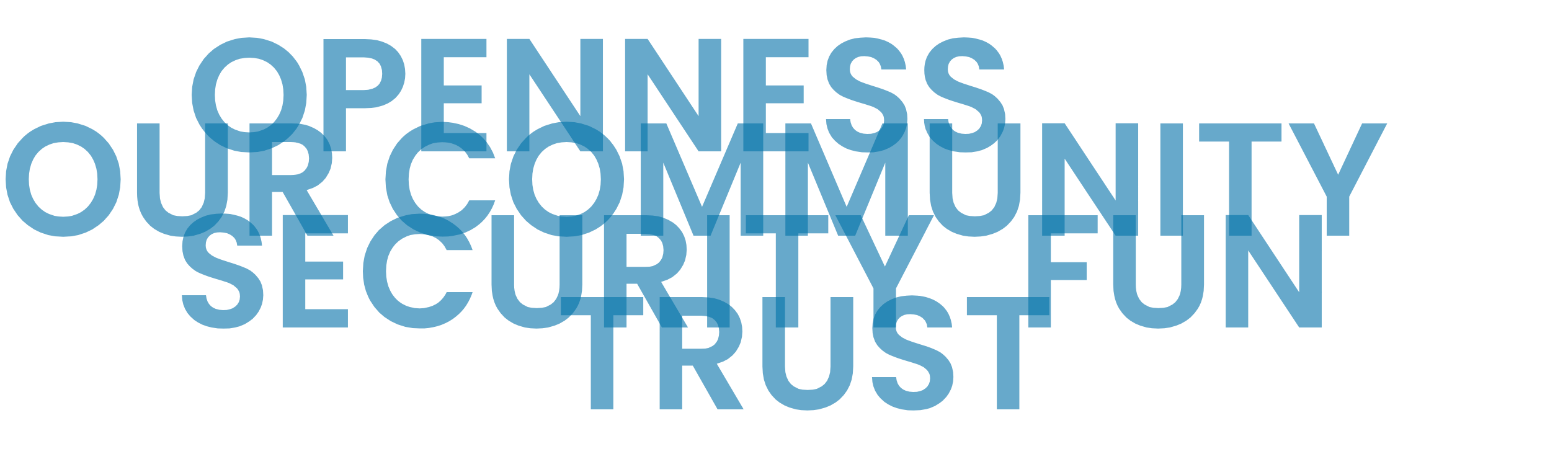
On April 16th 2026, World Plone Day will give you the chance to meet the people carrying that story forward. All seven conversations — community, security, editorial dignity, architectural longevity, digital sovereignty, developer craft, and organisational decision-making — will be live, open, and free to attend.
They have almost everything ready. The only thing missing is you.

World Plone Day takes place on April 16th 2026. Talks and sessions are open to the public. Details at plone.org
The German-language narrative referenced throughout this article was developed collaboratively as a communication initiative for the DACH region.
This English perspective is an independent editorial interpretation.