
Nick is handed over to the Plone Foundation on 9 June 2026
Published date: 20260619
On June 9, 2026, the Plone Foundation officially took stewardship of Nick, a modern, nearly headless content management system created by the original author of Volto, Rob Gietema. The project’s source code, documentation, demo instances, and associated domain names have been formally transferred from Rob’s personal repository to the official Plone GitHub organization, marking Nick’s transition into community governance under the Foundation’s umbrella.
What is Nick?
Nick is a Node.js-based backend that fully implements the `plone.restapi` specification. This makes it a drop-in replacement for the standard Plone backend when paired with the Volto frontend. Because Rob authored both Volto and the original `plone.restapi`, he had intimate knowledge of the API contract. Nick proves that Plone’s architectural model—content hierarchies, behaviors, workflows, security, and versioning—is robust enough to be cleanly reimplemented in a different runtime without losing functionality.
The name “Nick” is a playful nod to “Nearly Headless Nick” from the Harry Potter series—a ghost whose head was only partially detached. In CMS terminology, it’s a wink at the fact that while Nick removes the traditional template-driven frontend (the “head”), it still retains core CMS capabilities. You simply bring your own frontend, most commonly Volto, though any application that speaks the RESTful hypermedia API will work.
From Personal Initiative to Community Stewardship
As adoption grew across the web development community, Rob recognized that long-term maintenance, broader collaboration, and transparent governance would be best served under the Plone Foundation’s established processes.
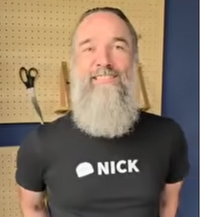
It started as a personal project, but as more people began using it, it made sense to bring it under the Plone umbrella so it can be properly maintained and owned by the community, says Rob Gietema.
The transfer was finalized yesterday, moving all code, rights, domains, and demo instances to the Foundation. I won’t miss it being “mine” anymore—I’ll remain the release manager and an active contributor, but now more developers can jump in and help shape its future.
Why Nick Complements Plone
Nick isn’t designed to replace Plone. Instead, it offers an alternative stack for projects that prioritize simplicity, a unified JavaScript ecosystem, or a fresh start without legacy compatibility layers. Built from the ground up with PostgreSQL and modern Node.js, Nick implements the same API as Plone but in roughly 10,000 lines of code, compared to Plone’s 1M+ lines. This ratio reflects decades of enterprise features, backward compatibility layers, and ecosystem growth in Plone—not shortcomings. Nick simply keeps the proven concepts and starts fresh.
When to Consider Nick:
- You want a full JavaScript/TypeScript stack (backend + Volto frontend)
- Simpler deployment with Node.js and PostgreSQL is a priority
- You’re starting a new project and don’t need existing Plone add-ons or legacy content migration
- You value a lean, highly readable codebase with modern async runtimes and built-in AI/RAG capabilities
When to Stick with Plone:
- Your project requires specific `collective.*` packages or deep ecosystem integrations
- You need to migrate existing Plone content or rely on battle-tested enterprise features
- Your organization is already standardized on Python/Plone workflows
- You benefit from the vast, mature support network around Plone’s long-standing infrastructure
How to Get Involved
Under the Foundation’s stewardship, Nick will follow standard Plone community governance practices. The project remains freely available under the MIT License. Developers, content architects, and frontend engineers are encouraged to explore the codebase, contribute patches, file issues, or help expand documentation.
- Source Code: github.com/plone/nick
- Documentation: nick.docs.plone.org
- Live Demo: demo.nickcms.org
- Issue Tracker & Discussions: github.com/plone/nick/issues
The Plone Foundation extends a warm welcome to Nick, and thanks Rob Gietema for building such a compelling project that reinforces the strength of Plone’s architectural vision while opening new doors for modern web development. We look forward to watching Nick grow alongside our broader ecosystem and contributing to its future together.