Bucharest Sprint 2026 - Report
Published 20260428
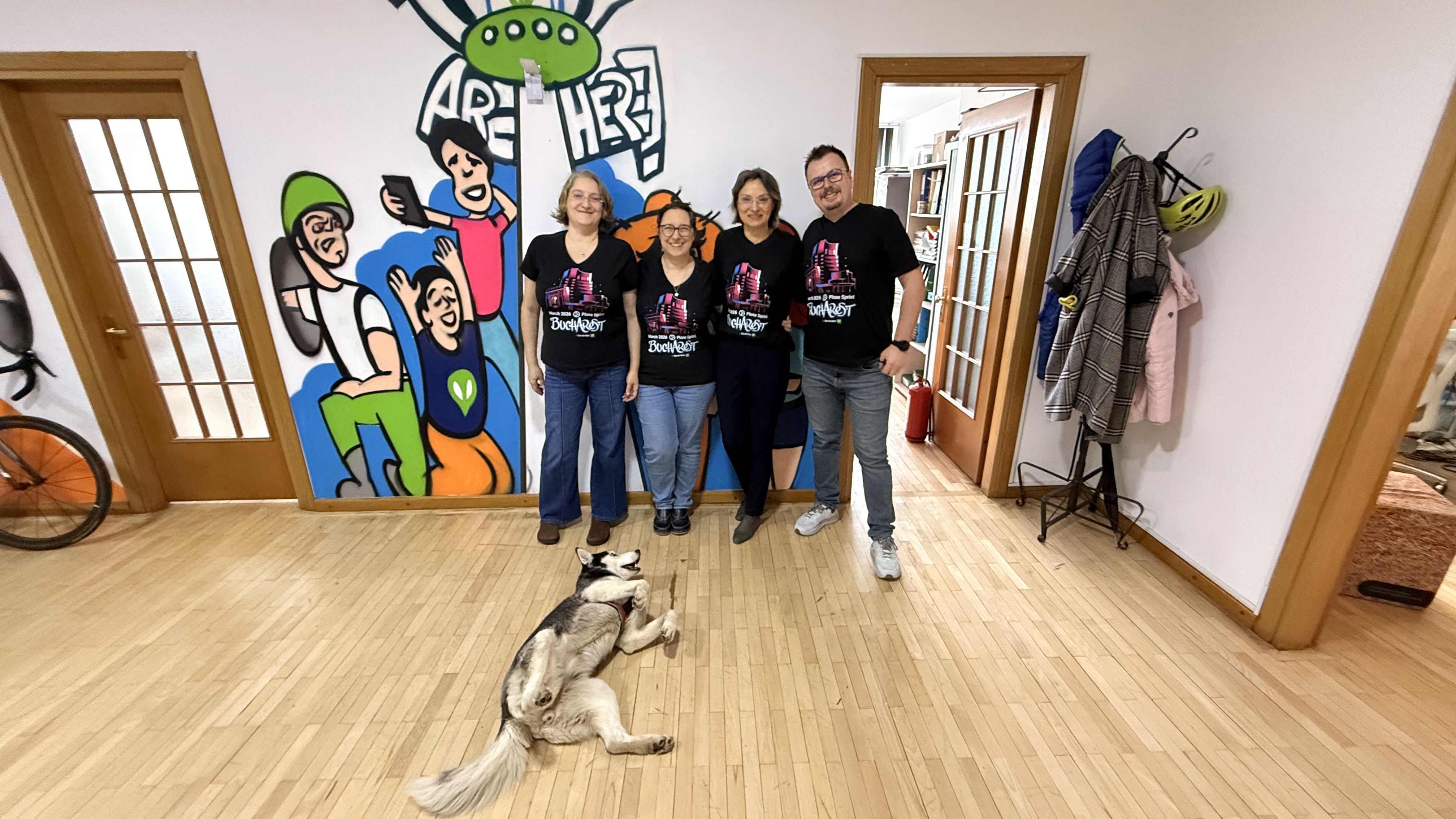
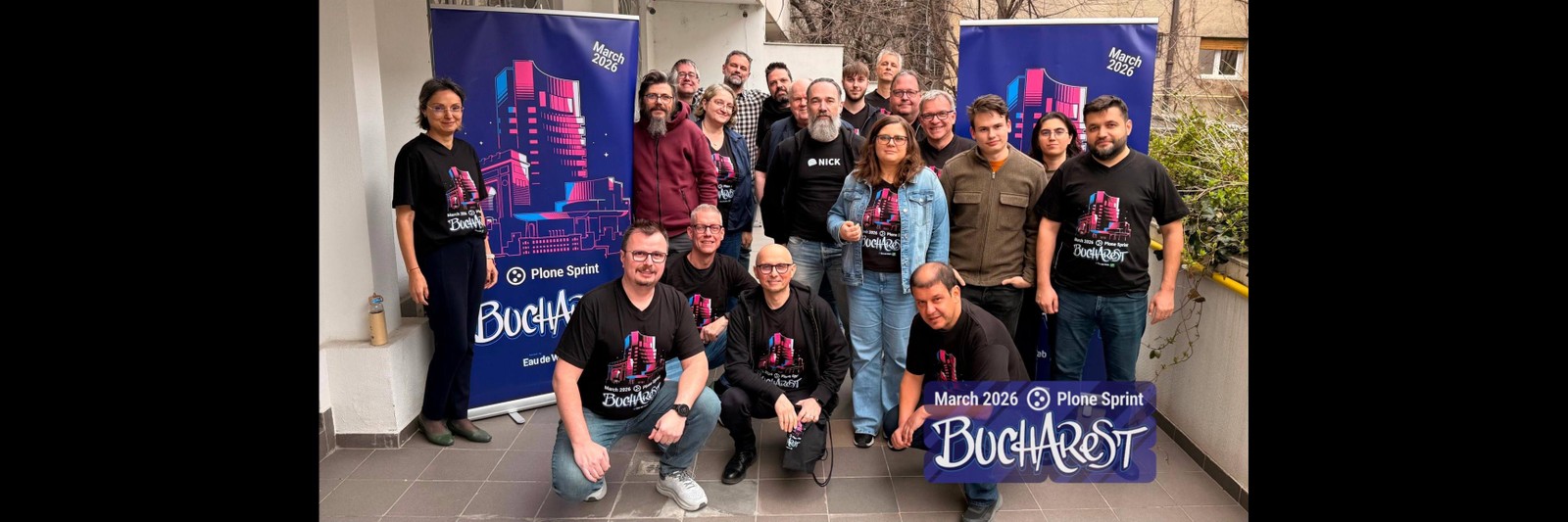
The Bucharest Plone Sprint 2026 took place between 16 and 20 March 2026 at Eau de Web’s headquarters in Bucharest, Romania, gathering over 30 contributors from multiple countries, both on-site and remotely. The event brought together a diverse group of Plone core developers, integrators, frontend specialists, and community contributors, collaborating intensively on the next generation of Plone technologies.
Participants joined from Romania, across Europe, and from various regions worldwide, both on-site and remotely, fostering a highly productive and collaborative environment. The sprint focused primarily on Plone 7 frontend development, Volto 19 release preparation, AI integrations and Plone MCP, as well as broader ecosystem improvements in developer experience, tooling, and infrastructure.
Throughout the week, contributors worked across numerous repositories and initiatives, including PLIPs, proof-of-concepts, feature development, bug fixes, documentation, and strategic discussions.
We would like to thank the Plone Foundation for their continued support of community events like this sprint, as well as all companies and individuals who made participation possible.
This report summarizes the main outcomes, technical achievements, and collaborative efforts during the sprint.
Attendees
Alec Ghica – Romania
Alexander Rybakov – Germany
Alin Voinea – Romania
Ana Oprea – Romania
Cihan Andaç – Türkiye
Claudia Ifrim – Romania
Érico Andrei – Brazil
Fred van Dijk – Netherlands
Gil Forcada Codinachs – Spain
Ionuț Dobricean – Romania
Jan Mevissen – Germany
Jörg Zell – Germany
Mack Palomäki – Sweden
Maik Derstappen – Germany
Piero Nicolli – Italy
Răzvan Miu – Romania
Rob Gietema – Netherlands
Silviu Panaite – Romania
Stefano Marchetti – Italy
Teodor Voicu – Romania
Tiberiu Ichim – Romania
Valentin Dumitru – Romania
Valentina Bălan – Romania
Víctor Fernández de Alba – Spain
Remote participants:
Andrea Cecchi – Italy
Armin Stross-Radschinski – Germany
Astrid Beyers – South Africa
Dante Álvarez – Mexico
David Glick – USA
Maurits van Rees – Netherlands
Nilesh Gulia – India
Steve Piercy – USA
Timo Stollenwerk – Germany
others
Photos & website
Overview of Contributions
Throughout the sprint, Alec Ghica coordinated logistics and facilitated the event while also contributing to discussions, Alexander Rybakov contributed fixes and improvements to Seven blocks, Alin Voinea supported Volto 19 work, MCP discussions, and Seven integration efforts, Ana Oprea worked on the metadata block and validated the unified editor, Andrea Cecchi worked on Recycle Bin and restapi improvements, Armin Stross-Radschinski worked on AI strategy, MCP concepts, and World Plone Day initiatives, Astrid Beyers led community strategy, governance sessions, and social media, Cihan Andaç contributed to the Maps block and frontend work for Seven, Claudia Ifrim contributed across discussions and onboarding support, Dante Álvarez contributed to MCP documentation and discussions, David Glick reviewed PLIPs and restapi issues, Érico Andrei led Cookieplone 2.0 development and documentation, Fred van Dijk coordinated plone.org upgrade strategy and repository restructuring, Gil Forcada Codinachs handled plone.meta maintenance and infrastructure tasks, Ionuț Dobricean improved the link widget, fixed tests and contributed to Seven, Jan Mevissen worked on debugging Seven, MCP topics, and Nick testing, Jörg Zell contributed to Sovereign Tech Fund work and explored Plate.js, Mack Palomäki worked on i18n improvements, scalability, and presentations, Maik Derstappen worked on Typesense integration and templating discussions, Maurits van Rees coordinated release management and package maintenance, Nilesh Gulia ported blocks to Seven and worked on querystring widgets, Piero Nicolli implemented the Seven toolbar and reviewed PRs, Răzvan Miu developed the MCP control panel and demonstrated AI integrations, Rob Gietema advanced Nick as a BFF including caching strategies and Seven integration, Silviu Panaite improved error handling in plone.restapi, Stefano Marchetti aligned marketing efforts and contributed to plone.org discussions, Steve Piercy focused on documentation, Teodor Voicu implemented the video block, datetime widget and removed moment.js, Tiberiu Ichim advanced the plone.mcp framework and overall MCP strategy, Timo Stollenwerk handled release notes, marketing coordination, and AI strategy, Valentina Bălan focused on Cookieplone testing and validation, Valentin Dumitru joined later contributing where possible, and last but not least 💙Víctor Fernández de Alba led Seven architecture and the unified editor PLIP.
Seven (Plone 7 Frontend)
Building on the strong foundation laid during previous sprints, the 2026 Bucharest Sprint marked a turning point in how the Plone frontend is envisioned and implemented.
A significant portion of the sprint was dedicated to the development of the new Plone 7 frontend, codenamed “Seven”. The central focus was the introduction, validation, and iterative refinement of a new unified editor architecture based on Plate.js, marking a paradigm shift from the traditional Volto block-per-editor model to a single, extensible editing surface capable of embedding structured content.
Víctor Fernández de Alba led the unified editor initiative, driving the PLIP, implementing the proof of concept, and coordinating feedback loops across the team. The editor supports mixed content editing, plugin-based extensibility, and opens the door for advanced features such as collaborative editing and AI-assisted authoring.
Key technical directions explored:
Migration strategy from block-based editing to unified editor
Server-side migration tooling to avoid client-side complexity
Compatibility layer allowing existing Volto blocks to run inside Plate via wrappers
Evaluation of data serialization formats (JSON, HTML, Markdown)
Performance improvements over multiple embedded editors
Relevant issues / PRs:
https://github.com/plone/volto/pull/7501 (React Server Components exploration)
https://github.com/plone/volto/issues/7957 (Toolbar in public bundle)
https://github.com/plone/volto/issues/4756 (Folder contents)
Seven branch: https://github.com/plone/volto/tree/seven
Migration strategy from block-based editing to unified editor
Server-side migration tooling to avoid client-side complexity
Compatibility layer allowing existing Volto blocks to run inside Plate via wrappers
Evaluation of data serialization formats (JSON, HTML, Markdown)
Performance improvements over multiple embedded editors
Individual contributions included:
Víctor Fernández de Alba: Unified editor PLIP, implementation, architecture discussions, migration tooling
Ana Oprea: Metadata block integration and validation in unified editor context
Piero Nicolli: Toolbar implementation for Seven, isolation and integration testing
Alexander Rybakov: Fixes for block rendering issues and styling inconsistencies
Jan Mevissen: Debugging image block issues, improving error handling, Nick testing
Cihan Andaç: Porting Maps block to Seven, adding styling, translations, and tests
Ionuț Dobricean: Link widget improvements, fixing test suites, beginning port to Seven
Teodor Voicu: Video block implementation, removal of moment.js, datetime widget implementation
Alin Voinea: Contributions to Seven and Volto 19 integration tasks
Tiberiu Ichim: Exploration of MCP integration inside editing workflows
Mack Palomäki: Input on i18n implications within unified editor
Additionally, contributors such as Jörg Zell explored Plate.js behavior and compared approaches with other CMS ecosystems, while Stefano Marchetti and Claudia Ifrim participated in alignment discussions and onboarding into Seven-related tasks.
Volto 19 and Plone 6.2
In parallel with the forward-looking work on Plone 7, a significant effort was dedicated to stabilizing and preparing the current generation stack for release.
Relevant issues / PRs:
https://github.com/plone/plone.restapi/pull/1992 (Image scaling improvements)
https://github.com/plone/plone.restapi/pull/1996 (Boolean URL parameters)
https://community.plone.org/t/plone-6-2-contributions-deadline/22916
The sprint contributed significantly to the stabilization and finalization efforts for Volto 19 and the upcoming Plone 6.2 release.
Fred van Dijk coordinated efforts around setting up a new repository for plone.org using modern tooling, avoiding legacy constraints. The team aligned work on cookieplone 2.0 with onboarding improvements for future development.
Key contributions:
Fred van Dijk: plone.org upgrade strategy, repository restructuring
Maurits van Rees: Release coordination, contribution deadline communication, package maintenance
Timo Stollenwerk: Release notes and marketing coordination
Alin Voinea: Contributions to Volto 19 and add-on updates
Cookieplone and Developer Experience
Alongside frontend and release work, improving the developer experience remained a central concern throughout the sprint.
Relevant issues / PRs:
Cookieplone PR #134 (validation improvements)
Cookieplone templates improvements (multiple PRs during sprint)
Improving developer experience was a major focus area, with extensive work on Cookieplone 2.0 and related tooling.
Érico Andrei led the effort, introducing new features such as improved template validation, GitLab integration, and enhanced configuration capabilities. Valentina Bălan supported testing and validation of new templates.
Key contributions:
Érico Andrei: Cookieplone 2.0 features, documentation, template improvements
Valentina Bălan: Testing and validation of templates
Mikel Larreategi & others: Review and improvements for edge cases
Discussions also covered future directions such as monorepo support, template reusability, and improved onboarding workflows.
Nick
As frontend architecture evolves, so does the need for a robust integration layer between frontend and backend systems.
Relevant issues / PRs:
https://github.com/plone/volto/pull/7501 (RSC integration relevance for Nick as embedded library discussions)
Rob Gietema focused on advancing Nick as standalone alternative server and as an embedded library solution for Plone.
Key contributions:
Rob Gietema: Configuration improvements, caching strategies (Varnish, xkeys), BFF integration with Seven
Jan Mevissen: Testing and debugging Nick integration
The integration of Nick into CI pipelines and its role in testing workflows were also discussed.
Internationalization (i18n)
Ensuring that Plone remains globally accessible and scalable across languages was another important theme of the sprint.
Relevant demos / resources:
https://dev.ljusa-tider.se/en (multi-language demo)
Mack Palomäki continued work on improving the internationalization system for Plone 7.
Key contributions:
Mack Palomäki: i18n improvements, scalability testing with multi-language setups (up to 40 languages), presentations and demos
His work laid the foundation for a more scalable and maintainable translation infrastructure.
Plone MCP and AI Integrations
One of the most forward-looking and exploratory tracks of the sprint focused on the intersection of Plone and AI-driven workflows.
Relevant issues / PRs:
https://github.com/eea/plone-mcp/pull/1 (initial MCP work)
A major focus area of the sprint was the exploration of Plone MCP (Machine Communication Protocol) and its role in enabling AI-assisted workflows within Plone.
Discussions and experiments revolved around integrating LLMs into both editorial and developer workflows, including content summarization, intelligent block generation, and system configuration assistance.
Key directions explored:
MCP as a middleware layer for AI agents interacting with Plone
Integration of LLM-driven actions within the editor (e.g. generating blocks from data)
Configuration of agents, tools, and providers via control panels
Use of MCP in developer tooling and DevOps automation
Individual contributions included:
Tiberiu Ichim: Migration of plone.mcp to new xmcp framework, experimentation with architecture and capabilities
Răzvan Miu: Development of MCP control panel for managing agents and LLM integrations
Dante Álvarez: Drafting user documentation and conceptual comparisons of MCP approaches
Armin Stross-Radschinski: Conceptual work on AI-assisted operations and system setup automation
Jan Mevissen: Contributions to MCP documentation and discussions
Alin Voinea: Participation in MCP discussions and integration analysis
Fred van Dijk: Coordination discussions around MCP implications for infrastructure
Additional contributors such as Timo Stollenwerk and Astrid Beyers participated in broader AI strategy discussions, connecting MCP work with long-term Plone roadmap initiatives.
plone.restapi and Backend Improvements
Complementing the frontend and AI-related work, contributors also invested effort in strengthening backend capabilities and APIs.
Relevant issues / PRs:
https://github.com/plone/plone.restapi/issues/1907 (docs redirect)
https://github.com/plone/plone.restapi/pull/2004 (API improvements)
Several contributors worked on improving Plone’s backend APIs and infrastructure.
Key contributions:
Andrea Cecchi: Recycle Bin improvements and REST API fixes
Silviu Panaite: Error handling improvements in API
Maurits van Rees: Maintenance of collective.recipe.backup
Documentation
Documentation remained an important focus throughout the sprint.
Key contributions:
Steve Piercy: REST API documentation updates, grant applications, PLIP drafting
Érico Andrei: Cookieplone documentation
Alex and others: Seven documentation and Table of Contents improvements
Community, Strategy, and Marketing
Beyond technical achievements, the sprint also served as a space for aligning on broader community, governance and strategic directions.
Astrid Beyers organized sessions on Plone governance and community structure, including a workshop with Jon Cherry focusing on the path toward a Plone constitution.
Additional efforts included:
Social media campaigns and World Plone Day preparations
Sovereign Tech Fund grant application discussions
Community recognition initiatives
Presentations and Sessions
Knowledge sharing remained an essential part of the sprint dynamic, with several sessions organized throughout the week.
The sprint included several presentations and collaborative sessions:
Mack Palomäki: i18n scalability demo
Jon Cherry session on governance and organizational structure
- MCP interest group meetings and discussions
Conclusion
Reflecting on the week as a whole, the Bucharest Plone Sprint 2026 stood out as both a highly productive, forward-looking and strategically important gathering.
Major progress was made on the Plone 7 frontend, including the introduction of the unified editor, alongside significant advancements in Volto 19, developer tooling, and backend integrations. The sprint also highlighted the growing importance of AI-assisted workflows, improved developer experience, and community governance evolution.
The collaboration between on-site and remote participants demonstrated the strength and resilience of the Plone community, continuing to push the platform forward both technically and strategically.
We look forward to building on these results in upcoming sprints and releases!