
Published date: 20260624
This year's sprint focused on several major milestones: the final releases of Plone 6.2 and Volto 19, strategic planning for Plone 6.3, the development of an AI roadmap for the project, continued work on the new Plone Aurora frontend, improvements to developer tooling, infrastructure modernisation, and community initiatives.
Release of Plone 6.2 and Volto 19
One of the major achievements of the sprint was the release of Plone 6.2 and Volto 19.
On the first day, the team worked on the final preparations for the release. This included merging last-minute fixes and translations from Mikel Larreategi and Jonas Piterek, while Maurits van Rees updated dependencies across several Plone core packages.
On the second day, release managers Maurits van Rees, Víctor Fernández de Alba, and Timo Stollenwerk agreed that the new version was ready. With that, the button was pressed and Plone 6.2 was officially released, with Volto 19 shipping alongside it.
AI Integration & Strategy towards Plone 6.3
One of the most important strategic topics of the Beethoven Sprint was the future role of artificial intelligence within the Plone ecosystem.
Following extensive discussions among release managers, framework team members, and the wider community, the sprint produced a clear decision to add Plone 6.3 to the release roadmap. This release will serve as the foundation for a series of AI-related capabilities that prepare Plone for the emerging ecosystem of AI agents, Retrieval-Augmented Generation (RAG) systems, and LLM-powered applications.
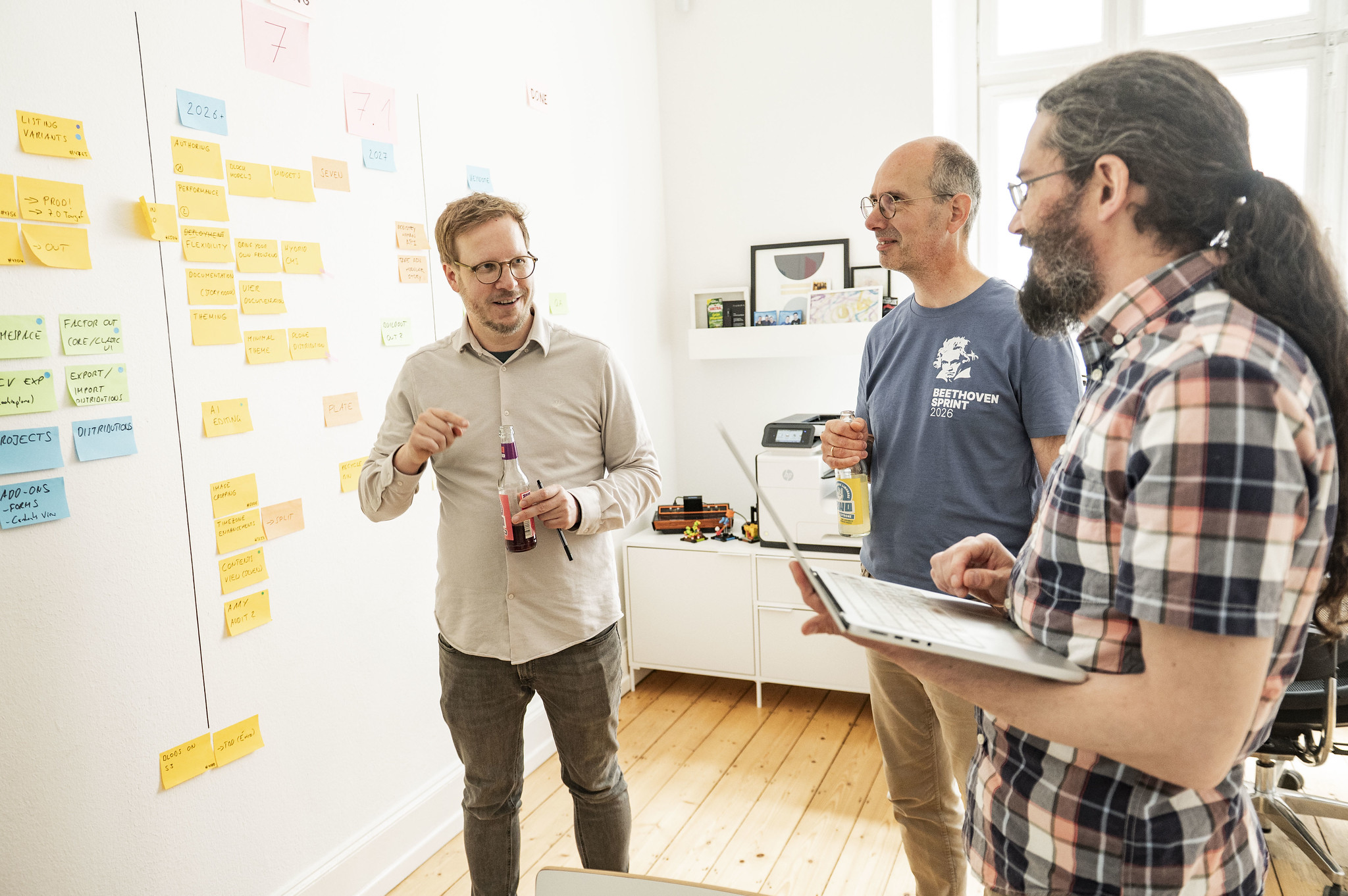
Throughout the week, contributors refined and advanced a number of Plone Improvement Proposals (PLIPs) targeted for inclusion in Plone 6.3. Together, these initiatives aim to make Plone content easier for AI systems to discover, consume, understand, and interact with, while preserving Plone's strengths in structured content management.
Key roadmap initiatives included:
Plone MCP (Model Context Protocol) – providing a standardised interface for AI agents to interact with Plone content and services. Work on the proposal was led by Dante Álvarez. (Issue #4213)
Markdown Support – exposing content in Markdown format to improve interoperability with LLMs, AI agents, and RAG systems. The proposal was developed by Jonas Piterek and David Glick. (Issue #1997)
Semantic Content – introducing machine-readable semantic representations of Plone content to improve understanding, retrieval, and reasoning by AI systems. (Issue #4302)
llms.txt Support – implementing the emerging standard that helps AI systems discover and understand content published through Plone. (Issue #4284)
In addition to the individual PLIPs, contributors discussed how AI integrations should be exposed within Plone and how organisations can connect Plone to external AI services and agents. These discussions led to the creation of collective-ai-settings, a new community package initiated by Franco Pellegrini and Dante Álvarez.
The package provides a reusable foundation for configuring and managing connections to AI systems, agents, and service providers. It is intended to serve as a common integration layer for future AI-related functionality within the Plone ecosystem, while remaining independent of any particular vendor or model.
To coordinate these efforts and provide transparency for contributors and stakeholders, the community established the foundations of an official AI roadmap for Plone and created a dedicated GitHub project to track AI-related initiatives, dependencies, and milestones: Plone AI Roadmap.
The roadmap serves as the basis for the AI section of the next official Plone roadmap, which is expected to be published around the Plone Conference 2026. By establishing a shared vision and concrete deliverables early on, the community ensures that AI-related development remains transparent, coordinated, and aligned with Plone's long-term product strategy.
A key outcome of the discussions was a shared architectural principle: AI capabilities should become a first-class concern within the Plone ecosystem while remaining entirely optional for users and organisations that do not require them. Core Plone will provide the necessary foundations and integration points, but adopters remain free to choose whether and how they engage with AI technologies.
Together, these efforts represent the first coordinated step toward a long-term AI strategy for Plone and establish a clear roadmap for future development in the Plone 6.x series.
Plone Aurora: The Next-Generation Frontend for Plone
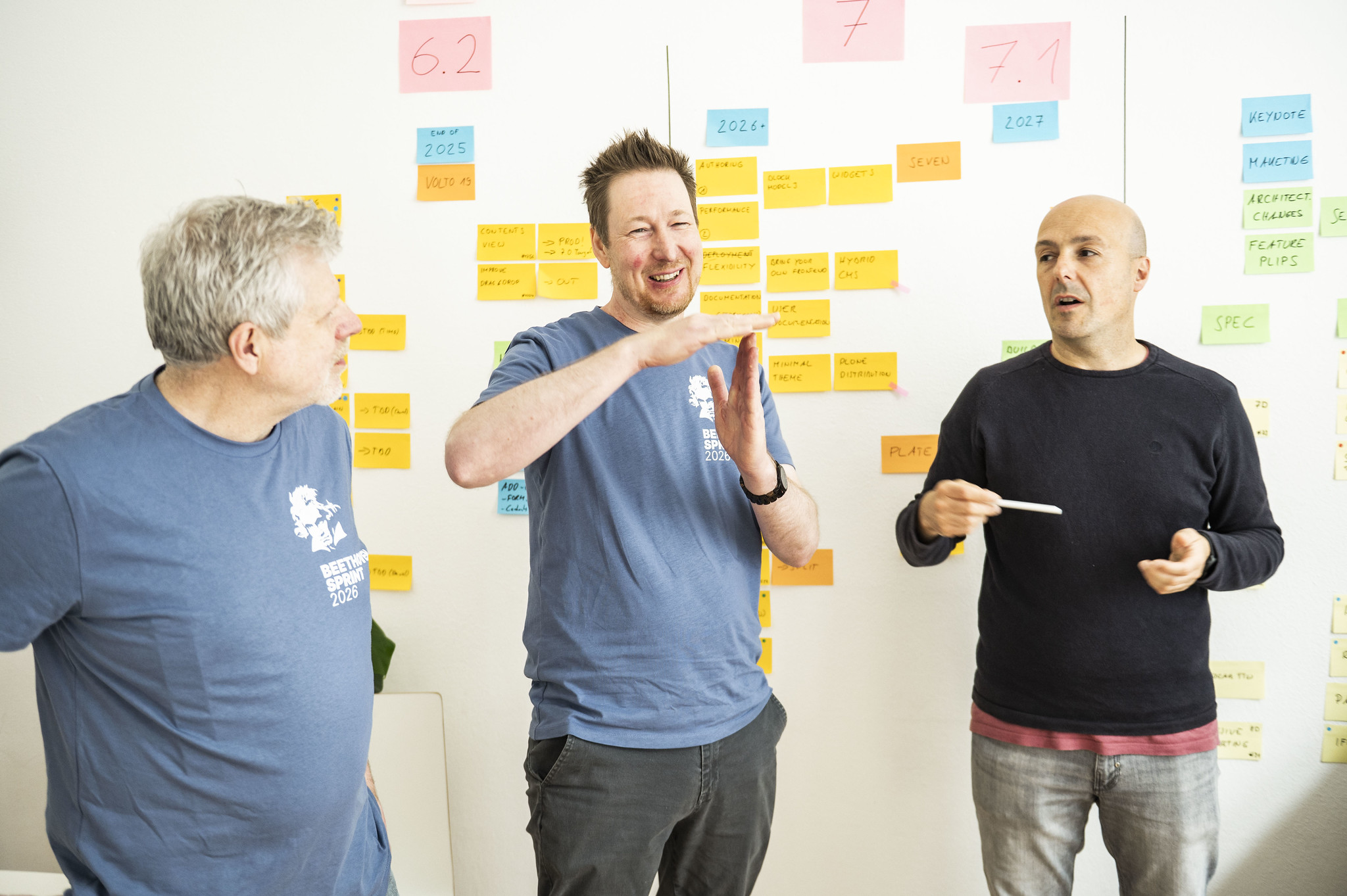
The main focus of the sprint was the upcoming successor to Volto: Plone Aurora. Built on the new modular frontend package architecture and on React Router 7, Plone Aurora is set to be the flagship of the Plone CMS experience for years to come.
The project leads, Víctor Fernández de Alba and Piero Nicolli, felt it was the right moment to decide on a couple of things: to find a better "home" (repository) for the project, and to give it a final name. Formerly known as Seven, the project was renamed following a democratic social event on the hacking night — after several proposals and an iterative voting process, the community settled on the name Plone Aurora.
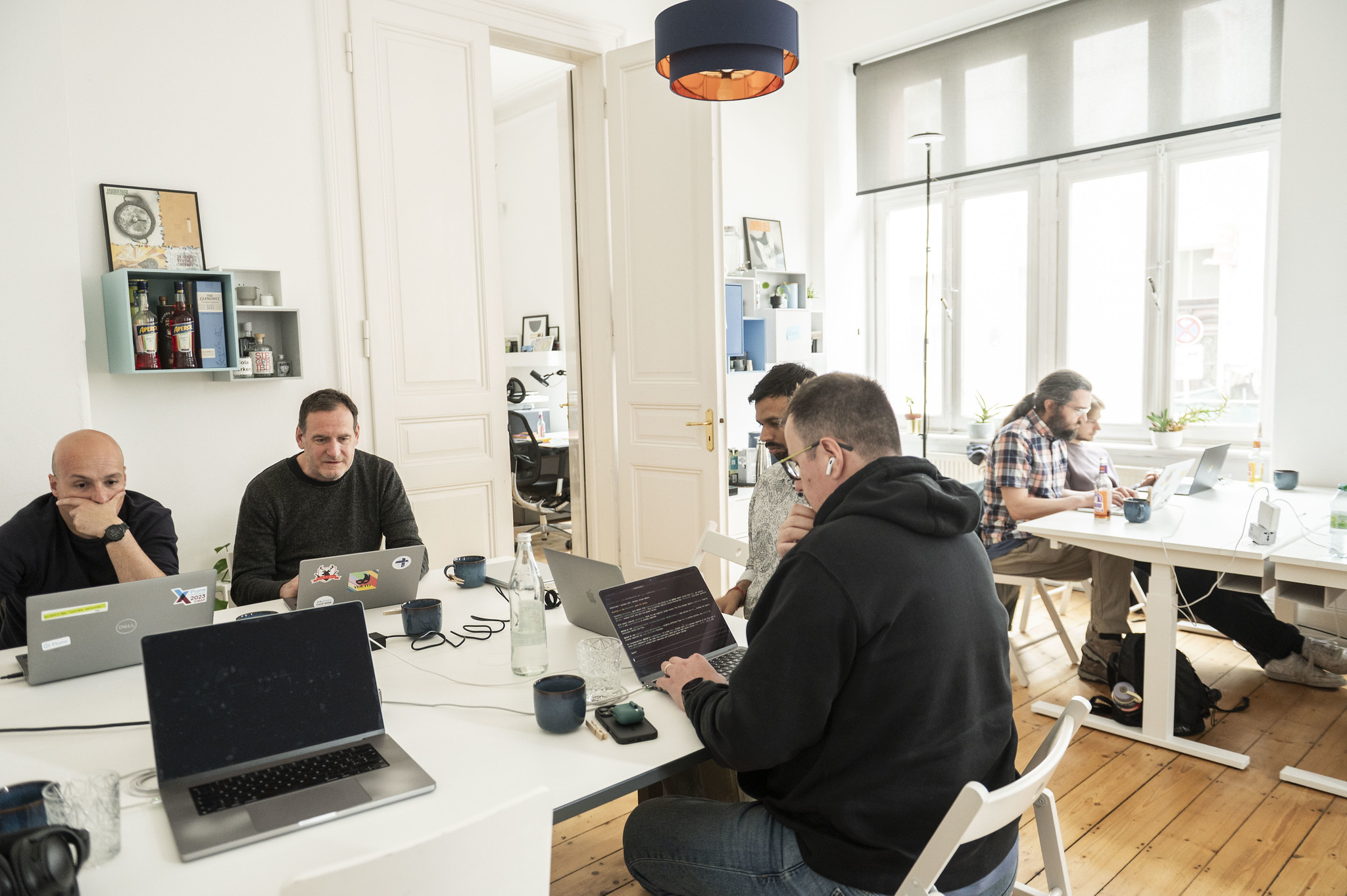
There was amazing progress toward the final goal. Among others, Alok Kumar, Nilesh Gulia, Piero Nicolli, Víctor Fernández de Alba, Marc Timo Bröskamp, Alin Voinea, Rohit Kumar, Thomas Mersch, Dante Álvarez, Tisha Soumya, and Franco Pellegrini invested significant effort in advancing the core features, including the Content View, link plugins, teaser blocks, and improved toolbar interaction.
The new repository for Plone Aurora lives at https://github.com/plone/aurora, and development continues there.
One of the most important features Plone Aurora will provide is the new authoring and editing experience built on a unified block engine. If you would like to see the current state of the project, give it a try, or explore what we have accomplished so far, you can get a hands-on experience at the demo site.
Cookieplone 2.0
Cookieplone is the codebase generation tool used by Plone. Using codebase templates – the default set being called cookieplone-templates – allows a developer, sysadmin, or DevOps engineer to create and maintain Plone projects and add-ons.
During the sprint, progress on Cookieplone 2.0 centred on implementing and testing the new extension mechanism, which allows organisations to "extend" the community-provided templates to fulfil their specific requirements.
In addition, the Developer Experience team (Érico Andrei, Mikel Larreategi, Alin Voinea, Philip Bauer, and Víctor Fernández de Alba) focused on refining templates, subtemplates, and project release management in cookieplone-templates.
Infrastructure, Marketing & Community
Another strand of work during the sprint addressed the base infrastructure the Plone community relies on, as well as the public face of Plone, namely the plone.org website.
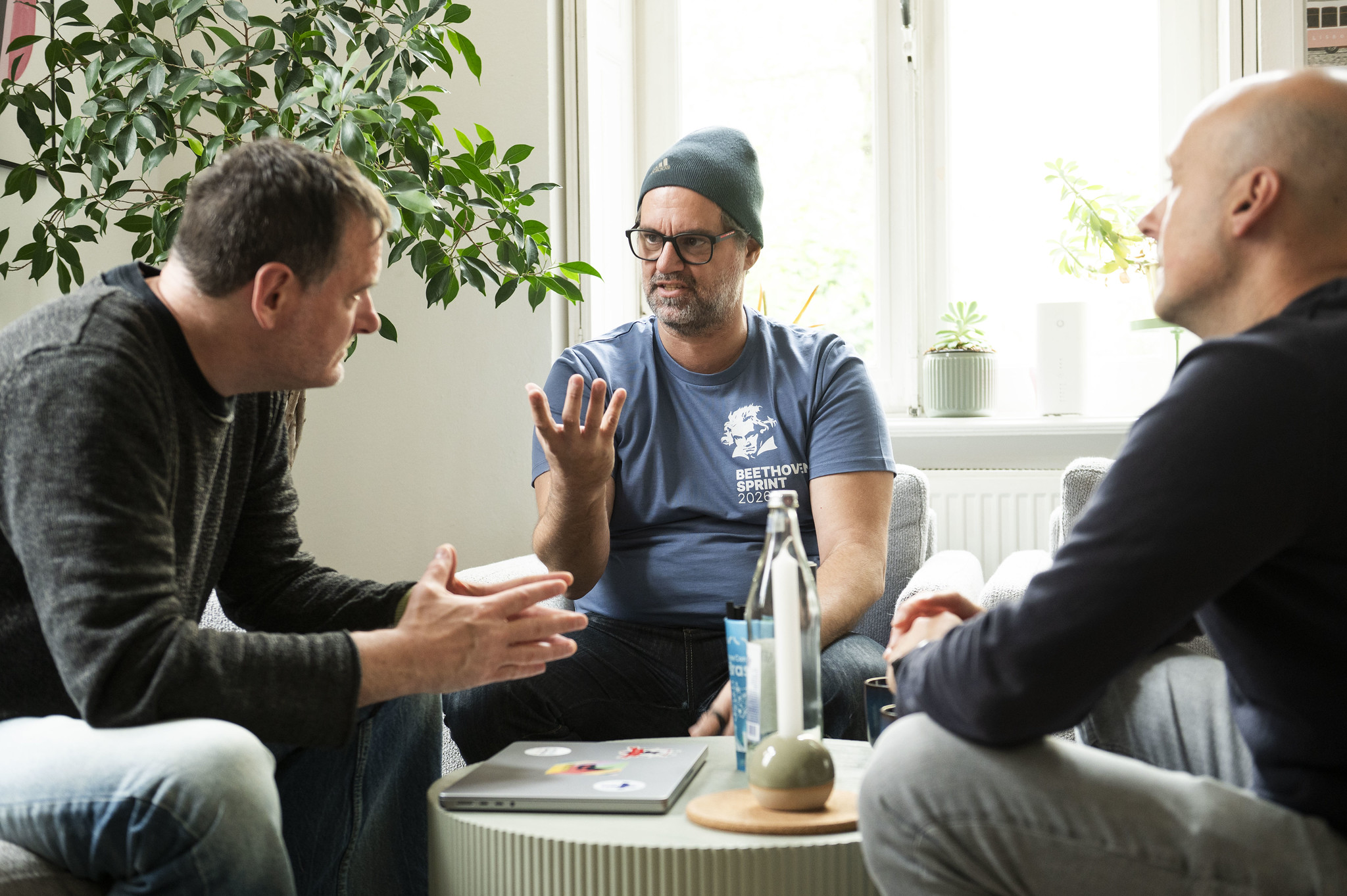
The website renewal team, including Rikupekka Oksanen, Fred van Dijk, and Stefano Marchetti, made significant strides in migrating and renewing plone.org and next.plone.org, which involved managing CI/CD pipelines, auditing content, and defining marketing strategies. Concurrently, efforts in i18n and accessibility, led by Mack Palomäki, Armin Stross-Radschinski, and Rob Gietema, focused on ensuring translation consistency through the creation of a formal style guide and the development of a new translation database API, alongside improvements to overall accessibility.
Social Activities: communal dinners, a botanical garden walk, hacking night, and karaoke
As is tradition at Plone events, we also came together in the evenings to share dinner at a selection of local restaurants. This year, those included Ukrainian food at "Nowa Mowa", traditional German cuisine at "Brauhaus Bönnsch", handmade Italian pasta at "La Pecora Nera", pizza on the hacking night, and — as always — vegan döner kebab at the fabulous "Black Veg".
On the sprint's Thursday, we set aside a day for social activities to switch things up between all the coding work. With the sun finally coming out, we took the chance to explore Bonn's botanical gardens in the afternoon, which (just like the Plone community) feature beautiful specimens from all over the world.
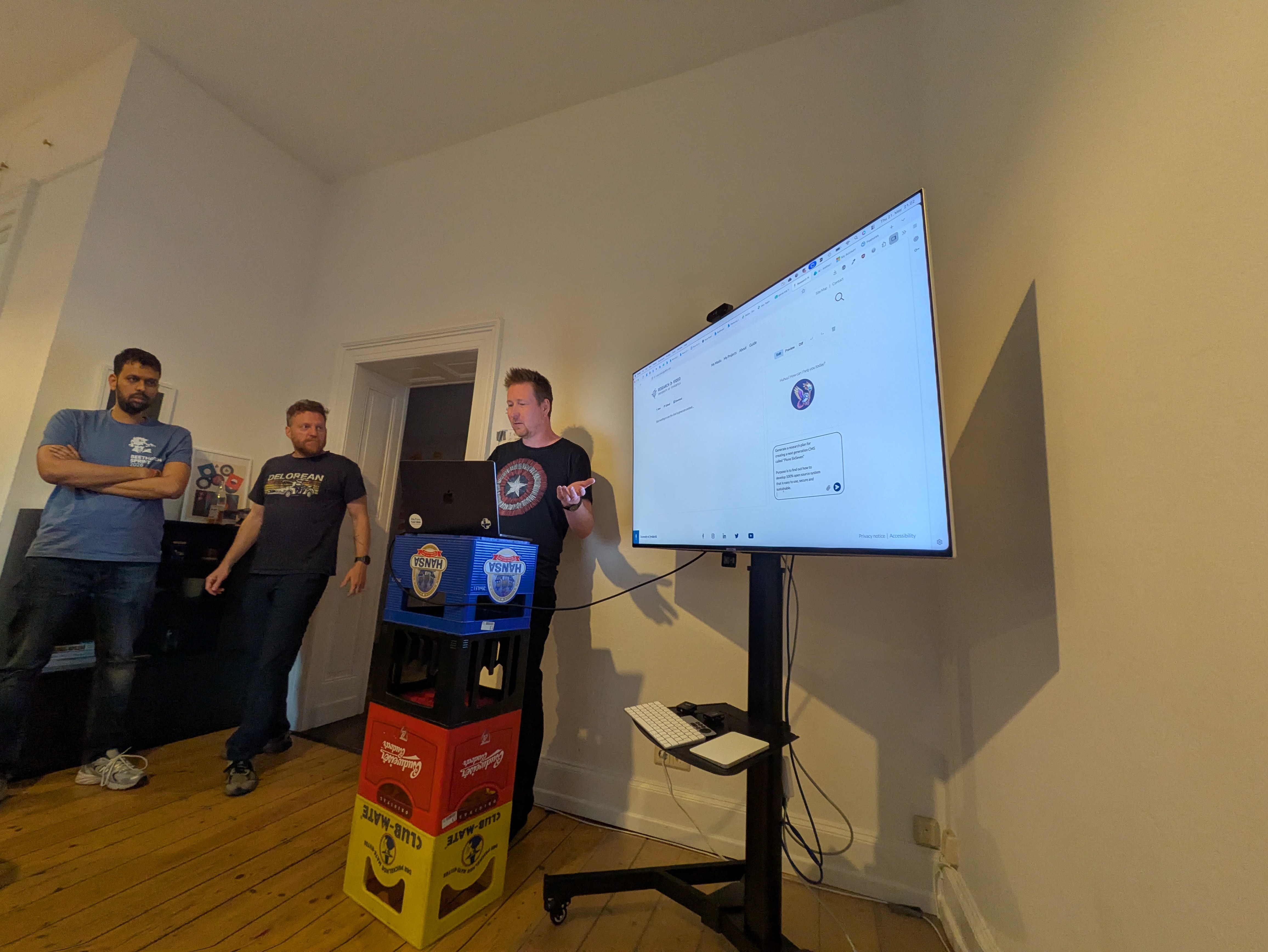
Later in the evening, we held our traditional hacking night, with pizza delivered straight to the office. After finishing our pizzas, we moved on to lightning talks:
Mack Palomäki: A style guide for translations
Maurits van Rees: Maintenance and maintainers of the Zope ecosystem
Mikko Ohtamaa: Omnara, an AI tool that uses multiple AI agents collaborating to develop software
Piero Nicolli: git worktrees for when you need multiple checkouts of one repository
Rikupekka Oksanen: The Jyväskylä University research video portal
Fred van Dijk: Sprint Wi-Fi setup
Érico Andrei: How I learned to stop worrying and love the chaos
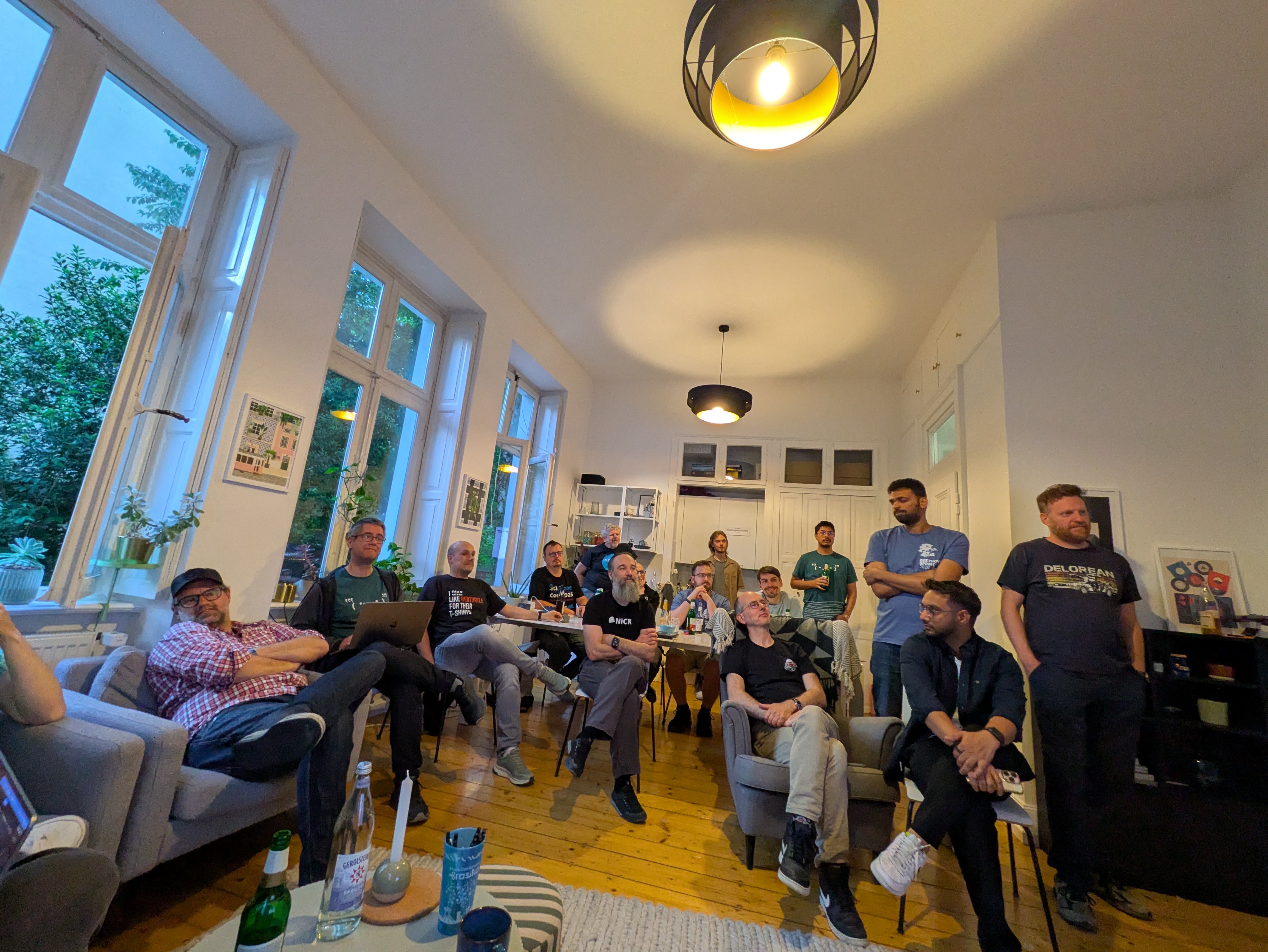
We concluded the day with what is probably the most Plone thing there is: karaoke! Performances ranged from karaoke evergreens such as "My Heart Will Go On" through local classics from our many international participants to some old-school punk rock.
Participants
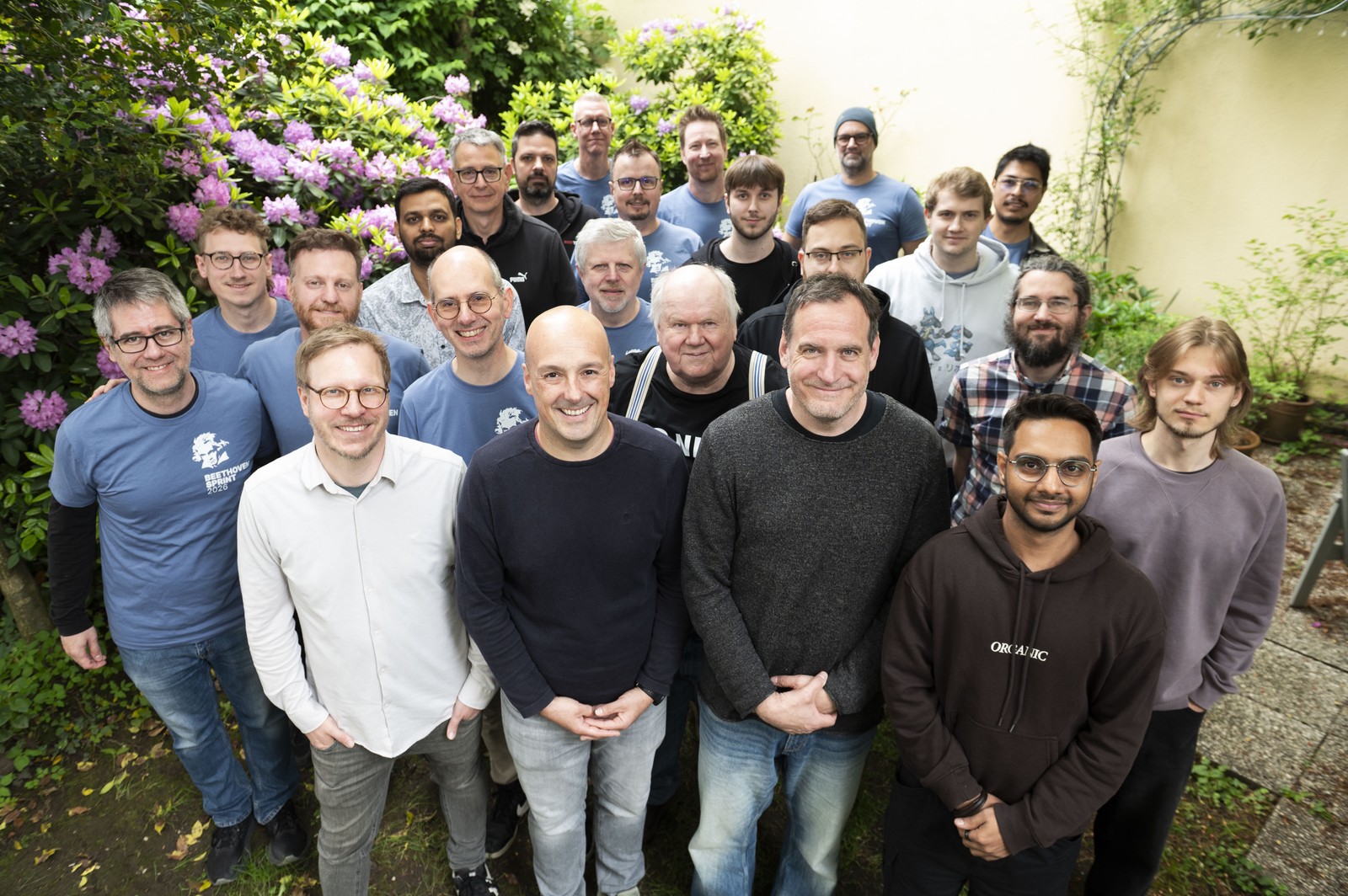
This year 26 People from 12 countries came to Bonn to take part in the Sprint as well as a few remote sprinters.
In person:
- Victor Fernandez de Alba
- Jonas Piterek
- Marc Timo Bröskamp
- Timo Stollenwerk
- Dante Álvarez
- Fred van Dijk
- Alok Kumar
- Thomas Mersch
- Piero Nicolli
- Jakob Kahl
- Nilesh Gulia
- Érico Andrei
- David Glick
- Philip Bauer
- Maurits van Rees
- Matthias Barde
- Mikel Larreategi
- Franco Pellegrini
- Alin Voinea
- Armin Stross-Radschinski
- Rikupekka Oksanen
- Mack Palomäki
- Stefano Marchetti
- Rob Gietema
- Alexander Rybakov
- Lars Walther
Remote:
- Steve Piercy
- Astrid Beyers
- Brian Davis
- Sabrina Bongiovanni
Photos and additional links